
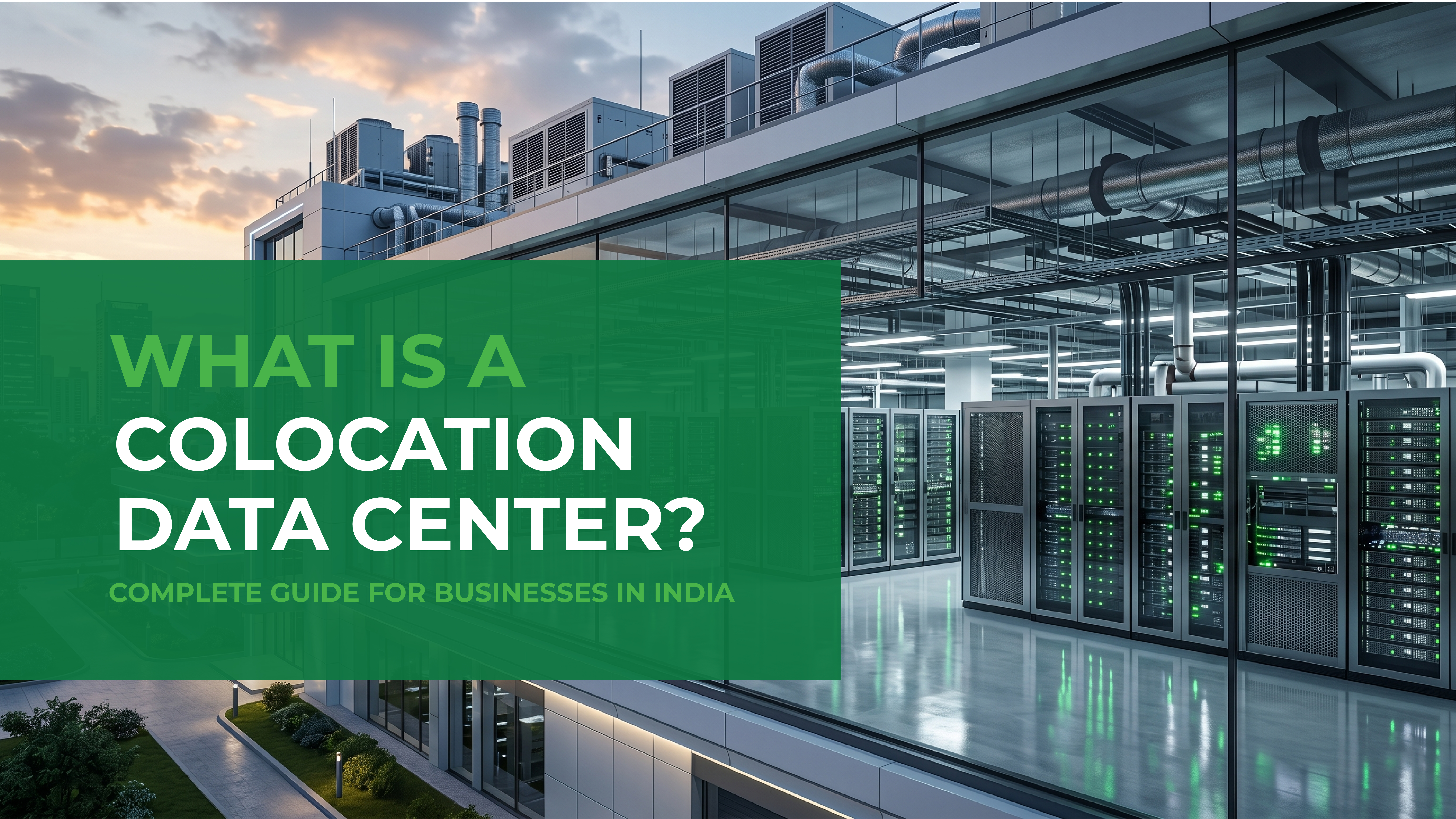
Businesses today rely heavily on digital infrastructure to run their applications, store data, and manage IT operations. As infrastructure demands continue to grow in technology, many organizations are looking for alternatives to maintaining their server environments.
One of the most widely adopted solutions is colocation data centers to optimize cost.
A colocation data center is a facility that allows businesses to place their own servers and IT equipment inside a professionally managed facility that provides power, cooling, connectivity, security, and operational support. This model helps organizations improve reliability, scalability, and infrastructure performance without building and maintaining their own data center.
In India, colocation adoption is growing very fast as IT enterprises, SaaS companies, financial institutions, and digital businesses require reliable infrastructure environments that support uptime, compliance, and future scalability.
This guide explains what a colocation data center is, how colocation works, its business benefits, and why organizations in India are increasingly adopting colocation services.
What is Colocation?
Colocation is a service where businesses can place their own servers and IT hardware inside a third-party data center facility while also using shared infrastructure add-on services such as power, cooling, connectivity, and physical security.
Instead of building a private server room or operating an independent data center, organizations use colocation facilities to host infrastructure in a professionally managed environment, maintaining ownership and control of their hardware while reducing infrastructure management complexity and operational costs.
What is a Colocation Data Center?
A colocation data center, also referred to as a "colo data center", is a specialized infrastructure facility designed to host servers, storage systems, networking equipment, and IT infrastructure.
In a colocation model, the business owns the servers and IT hardware, and the data center provider manages the facility infrastructure. Unlike traditional office server rooms, colocation environments are engineered specifically for high-availability infrastructure operations.
A modern colocation data center typically includes redundant power infrastructure, backup generators, advanced cooling systems, fire suppression systems, multi-layer physical security, carrier-neutral connectivity, and 24/7 monitoring and operational support.
How Does Data Center Colocation Work?
The colocation process is relatively straightforward. Businesses purchase or maintain their own IT hardware and install it inside dedicated rack space within a colocation facility, while the data center provider supplies the supporting infrastructure needed to operate those systems reliably.
Here's how a typical colocation data center works:
1. Rack Space Allocation
The provider allocates rack space based on infrastructure requirements. Businesses may choose between quarter rack, half rack, full rack, and private cage environments as per their requirements.
2. Server Deployment
The organization installs its servers, switches, storage systems, and networking equipment inside the allocated rack space.
3. Power and Cooling Systems
The colocation facility provides redundant power feeds, UPS systems, backup generators, and precision cooling systems, ensuring infrastructure stability and uptime.
4. Network & Connectivity
Businesses connect to internet providers, carriers, and cloud environments through the facility's network ecosystem. Many enterprise colocation facilities support carrier neutrality, allowing organizations to choose preferred network providers.
5. Monitoring and Support
Most colocation providers offer 24/7 monitoring, remote hands support, physical access management, and infrastructure maintenance assistance — helping businesses manage infrastructure efficiently even without maintaining a large on-site operations team.
India's digital infrastructure demand is growing rapidly across industries. Organizations are scaling cloud environments, AI workloads, SaaS platforms, digital services, and enterprise applications faster than ever before. As infrastructure requirements increase, many businesses are finding traditional server rooms and office-based infrastructure difficult to grow efficiently, so many are now partnering with a reliable data center provider in India to improve infrastructure growth, uptime, and productivity.
Several Factors Are Driving Colocation Adoption in India
Rising Infrastructure Costs — Building and operating private data center environments requires significant investment in power systems, cooling infrastructure, physical security, networking, and redundancy. Colocation helps reduce these capital expenses.
Demand for High Uptime — Businesses today require continuous availability for applications, websites, customer systems, and enterprise platforms. Colocation facilities are designed to support high infrastructure uptime and operational continuity.
AI Infrastructure Growth — AI workloads, GPU servers, and high-performance computing environments require advanced cooling and power infrastructure that many office server rooms cannot support effectively.
Scalability Requirements — Organizations need infrastructure environments that can scale as business requirements grow. Colocation allows businesses to expand rack space and infrastructure capacity without relocating operations.
Benefits of Colocation for Businesses
Colocation offers several operational and strategic advantages for enterprises.
1. Reduced Infrastructure Costs — Colocation allows businesses to use enterprise-grade infrastructure without managing the entire facility independently, reducing infrastructure overhead, operational maintenance costs, and facility management complexity.
2. Enterprise-Grade Uptime — Colocation facilities are designed with redundancy across power systems, cooling systems, connectivity, and network infrastructure, improving infrastructure reliability and uptime.
3. Scalability — Businesses can expand infrastructure capacity as needed by adding rack space, servers, and network equipment, supporting long-term growth without major infrastructure rebuilds.
4. Physical Security — Professional colocation facilities implement multiple layers of physical security, including biometric access controls, CCTV monitoring, restricted access zones, and security personnel.
5. Better Connectivity — Carrier-neutral colocation facilities provide access to multiple network providers and cloud connectivity options, improving network performance, redundancy, and latency management.
6. Compliance and Reliability — Colocation helps businesses maintain better infrastructure governance and operational control aligned with industry compliance standards.
7. Business Continuity — Redundant systems and professionally managed infrastructure environments reduce risks associated with outages and operational disruptions.
Colocation vs Cloud vs On-Premise Infrastructure
| Feature | Colocation | Cloud | On-Premise |
|---|---|---|---|
| Hardware Ownership | Business-owned | Provider-owned | Business-owned |
| Scalability | High | Very High | Limited |
| Infrastructure Control | High | Medium | High |
| Upfront Investment | Moderate | Low | High |
| Maintenance Responsibility | Shared | Provider | Business |
| Performance Control | High | Variable | High |
| Physical Infrastructure Management | Provider | Provider | Business |
| Customization | High | Limited | High |
| Uptime Infrastructure | Enterprise-grade | Provider-managed | Depends on setup |
Colocation is often preferred by organizations that want infrastructure ownership, predictable performance, operational control, and enterprise-grade hosting environments without building a full private data center.
Who Should Use Colocation Services?
BFSI Organizations need high uptime, compliance, secure infrastructure, and low-latency connectivity.
SaaS Companies often require scalable infrastructure environments that support rapid application growth.
Healthcare Organizations rely on stable infrastructure for patient systems, records management, and operational continuity.
E-Commerce Platforms require reliable infrastructure to handle traffic spikes, transactions, and customer operations.
Enterprises with Hybrid Infrastructure — IT enterprises operating hybrid cloud environments often use colocation to support dedicated workloads and infrastructure control.
AI and GPU Infrastructure Deployments require high-density power and cooling capabilities that enterprise colocation facilities can support effectively.
Key Factors to Consider Before Choosing a Colocation Provider
Not all colocation providers offer the same infrastructure capabilities. Here are 7 key factors to evaluate:
- Uptime and Redundancy — Redundant power systems, backup generators, cooling redundancy, and high infrastructure availability.
- Connectivity Options — Carrier-neutral facilities provide better flexibility and network resilience.
- Scalability — Choose a provider that can support future infrastructure expansion.
- Security Standards — Physical security systems, access control policies, surveillance infrastructure, and operational monitoring.
- Support Services — 24/7 operational support and remote hands services for enterprise infrastructure management.
- Location Advantages — Facility location impacts latency, connectivity, disaster recovery planning, and operational accessibility.
- Infrastructure Design — Modern colocation environments should support high-density workloads, AI infrastructure readiness, and scalable power capacity.
For example, enterprise-grade facilities like Silvernox support modern infrastructure requirements through scalable colocation environments designed for business continuity and operational reliability.
Future of Colocation and Data Centers in India
India's digital economy continues to drive strong demand for data center and colocation infrastructure. Several trends are shaping the future of the industry: AI infrastructure expansion requiring higher power density and cooling efficiency, hybrid cloud adoption combining cloud platforms with dedicated colocation infrastructure, enterprise digital transformation modernizing infrastructure for scalable applications, connectivity growth as internet usage and digital services expand, and data localization and compliance becoming increasingly important for organizations managing sensitive workloads.
India is expected to remain one of the fastest-growing digital infrastructure markets globally, making colocation a critical part of enterprise IT strategy.
Final Thoughts on Colocation Data Center
A colocation data center provides businesses with a reliable and professionally managed infrastructure environment while allowing them to maintain ownership and control of their servers and IT systems.
As organizations in India continue expanding digital operations, colocation is becoming an increasingly practical solution for improving uptime, reducing infrastructure complexity, and supporting long-term business growth.
If your organization is exploring enterprise colocation or data center infrastructure solutions, you can connect with the Silvernox team to discuss your infrastructure requirements and scalability goals.
Frequently Asked Questions
What is a colocation data center?
A colocation data center is a secure facility where businesses keep their servers and IT equipment. The business owns the hardware, while the data center provider handles power, cooling, security, internet connectivity, and maintenance.
How does colocation work?
Businesses install their servers inside rented rack space within a colocation facility, while the data center provider manages the supporting infrastructure services like power, cooling and connectivity.
What are the benefits of colocation?
Reduced infrastructure costs, enterprise-grade uptime, scalability, improved security, business continuity, and reliable connectivity.
Is colocation better than cloud?
Colocation and cloud serve different needs, so it depends on business requirements. Colocation provides greater infrastructure control and hardware ownership, while cloud offers flexible on-demand scalability.
Who uses colocation services?
IT enterprises, SaaS companies, BFSI organizations, healthcare providers, e-commerce platforms, and AI infrastructure deployments.
What does rack space mean in a data center?
Rack space refers to the physical cabinet area inside a data center where servers and networking equipment are installed.
Are colocation services secure?
Yes. Professional colocation facilities use multiple layers of physical security, surveillance systems and controlled access environments.
Why are businesses in India adopting colocation?
Businesses in India are adopting colocation to support digital transformation, improve uptime, scale infrastructure efficiently and reduce operational infrastructure costs.